Let’s play a game.
Your knees are hot and swollen, and standing up for too long hurts. However, your ankles are really starting to lose mobility the longer you stay off your feet. Your fingers and wrist are also inflamed, but it’s hard to tell if it’s Arthritis related or from staying up all night writing that blog post. There’s a trigger developing in your palm. Your shoulders are being damaged by the steroids you’re taking for the trigger. You’re worried that they’ll eventually need replacing, like your hips. You’re extra tired, and feel like you have the flu. Your back has been hurting since July.
Your parents are worried about you. You’re not eating enough. Your eczema is starting to appear in patches. You’re not sure if it’s a side effect or a symptom. You’ve missed two weeks of work, you have three appointments next week. Your cat, Shaggy, hasn’t left your lap all day. Your bank account is dangerously low and your cortisol levels are dangerously high. You are in a flare.
What do you do?
I never claimed this game would be fun. In fact, much like the game of life, flares are exhausting and highly stressful. Anyone can relate to feeling overwhelmed and drained, but it’s hard to describe a flare in a way others without chronic illnesses can understand. In addition, I sometimes worry about sounding dramatic, or like I’m complaining about a laundry list of grievances.
No one wants to feel like they are burdening others with their suffering. No one wants to feel like a dark storm cloud.
So, returning to our game, we’ve found ourselves in a bit of a Twister situation. One hand on green, one hand on red. Do we rest, allowing our body to heal and recover? Do we keep pushing, keep stretching, keep active? Do we schedule another specialist appointment to try and identify another treatment? Do we wallow, or pretend everything is normal?
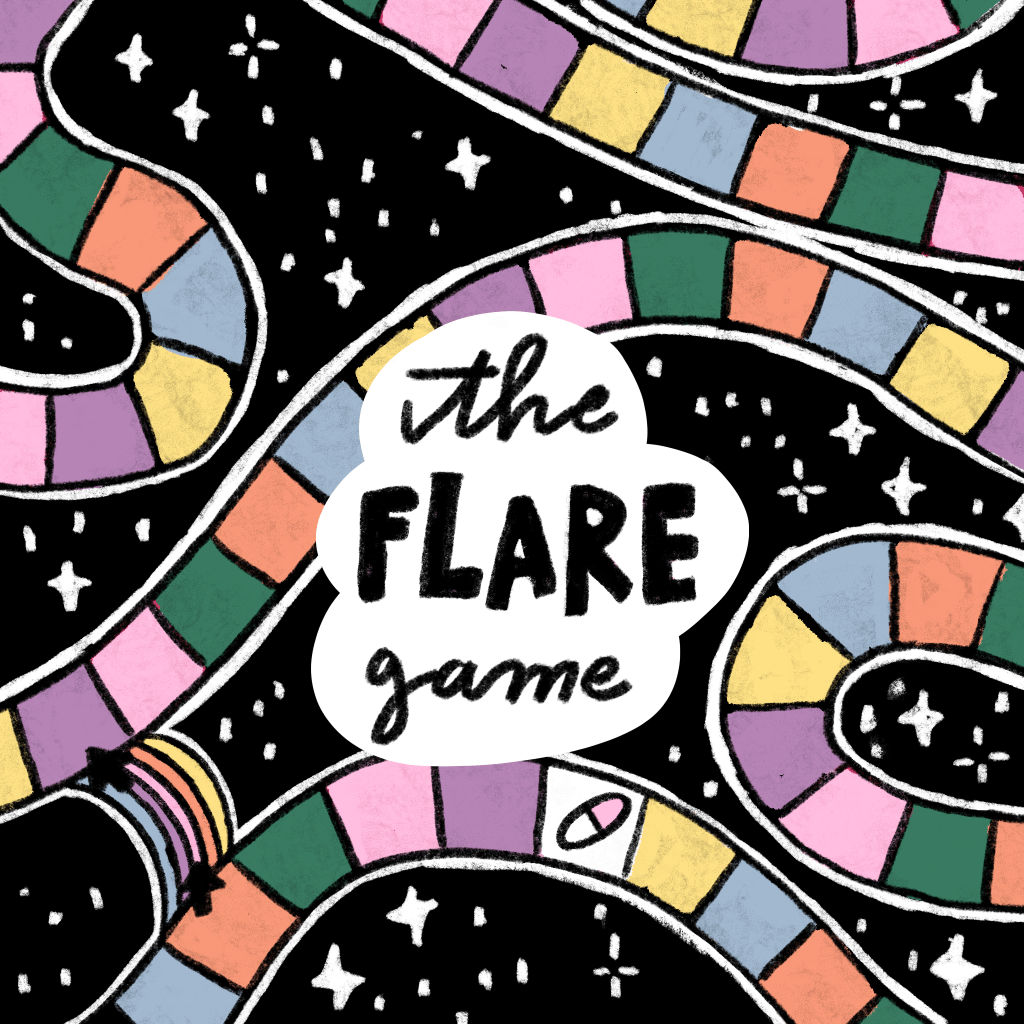
Flares are like candyland. One of my favorite games as a kid — partly for the bubblegum aesthetics, but also for the journey. Skipping ahead if you draw the right card, or complete stagnation. The feeling of making progress and bypassing obstacles. The twists and turns of the board, the unpredictability. Weaving through the peppermint forest and the lollipop woods, then stumbling on a rainbow that takes you all the way to the end.
You can be stuck drawing the same bad-luck card for a few turns, or it can be your entire game. You can see your friends passing you as you struggle to advance one square.
I’ve been stuck in the molasses swamp for a while. It’s been really hard to find the right treatment, and since most meds only really last five years (at best), it’s a bi-decade merry-go-round of successes and failures. I’ve had Arthritis for so many years and have tried basically everything on the market. In between successful treatments, I’ve been in flares that have taken months to recover from, resulting in joint deformities and canceled plans.
The anxiety that comes from the anticipation of the next crisis makes it really hard to live in the moment, and really hard to plan for the future.
The trickiest part of the game are the question marks. Anything can trigger a flare–certain weather, certain food, too much stress, the wrong medicine. It could be raining in candyland, and you’d be out of commission for a couple days. One bad hangover could mean a trip to candyland urgent care. Decisions weigh more, and their consequences hurt more.
I’ve gotten in a bad habit of brushing off sympathies and underplaying the severity of my disability. After all, I’ve had it since 1998 and am pretty accustomed to the routine of it all. But, in an effort to conceal (don’t feel), I’ve been denying the reality of my condition, not only to others but to myself. And by doing this, I’ve turned away support and shut out people who genuinely want to help.
Everyone’s got their own way of coping. Like Elsa, mine was a kingdom of isolation and a lot of singing. Also a good candle-lit bubble bath. But no one is the expert, and no two flares are the same. The Arthritis Foundation talks about adding tools to your toolkit, like surviving a flare is all about having the right wrench or hammer. We all have our own strategies—some people preach the gospel of heated blankets and paleo diets. Other people say the answer is guided meditation and cannabis gummies. Drug companies prescribe the magic pill for complete remission, with only a terribly long list of caveats. All are perfectly reasonable places to start–from there, the key is to listen to your body and give yourself some grace.
I’m not here to solve anything, or tell you how to play your game of candyland. All Shaggy and I can tell you is that flares are really difficult, and people with chronic illnesses are resilient as hell. And what I am certain of is the importance of attitude and perspective.
In my opinion, flares do three things:
- Remind you of the severity of your condition
- Sharpen you into a stronger, more caring person
- Teach you to appreciate the pain-free freedom of remission
Hang in there, warriors. You are not alone.
Xx
Lil


 lily jean
Leave a reply to Annabelle Garcia Cancel reply